BLOG · PHARMA PRINTING GUIDE
How to Choose a Pharma Printing Partner: 10 Questions to Ask Before Paying
Choosing a pharma printing company is not the same as picking a local press for wedding cards or shop banners. A visual aid, prescription pad or chemist book carries your brand straight into a doctor's chamber — and a 90-second detailing call is too important to lose to blurred colours, weak binding, or a partner who goes quiet after taking the advance. Yet most pharma companies pick a printing partner on price alone, then spend the next launch cleaning up the mess.
Before you pay a single rupee, ask these 10 questions. The first eight sort the professionals from the job-work shops. The last two — the ones almost no buyer asks — decide whether your second order matches your first.
1. Do you specialise in pharma, or is pharma just one of many jobs?
A general printer treats your visual aid like any other brochure. A pharma-focused partner understands composition, molecule claims, MR detailing flow, and the difference between a doctor-facing story and a chemist-counter tool. Ask how many pharma clients they serve and whether they've printed for your therapy area. Specialisation shows up in the small things: accurate medical matter, compliant layouts, and a design that actually holds a doctor's attention. A generic pharma printing company will get the ink right but the story wrong.
2. Who is accountable for quality — one team, or three vendors?
This is the question that separates an accountable supplier from a middleman. Few pharma print suppliers own every machine — most work with partner presses, and that is fine. What matters is who owns the result: does one team write the specification, check the printed sheets, bind, pack and dispatch, and answer when something goes wrong? Or do you quietly become the coordinator, chasing a designer, a press and a binder for one book? Ask directly: "Who checks the printed sheets before binding, and who do I call if the colour is off?" One name is the right answer.
3. What is your minimum order quantity?
Small and PCD pharma companies rarely need 5,000 pieces on day one. If a printer insists on a high minimum, you're either over-ordering or being pushed toward a partner built for bulk, not for you. The right pharma printing company will run a small batch with the same design and quality process as a large one — quantity should only change your per-unit rate, not your access to good work.
4. How does proofing and approval work, and how fast?
You should never approve a print job blind. Ask how they share proofs and how quickly. A modern partner sends a design mockup on WhatsApp within a few days; you approve or request changes, and only then does anything reach the machine. If the answer involves office visits, printed dummies by courier, or a vague "trust us" timeline, expect delays at every launch. Speed of proofing is the single best predictor of on-time dispatch.
5. What paper, lamination and binding options do you actually offer?
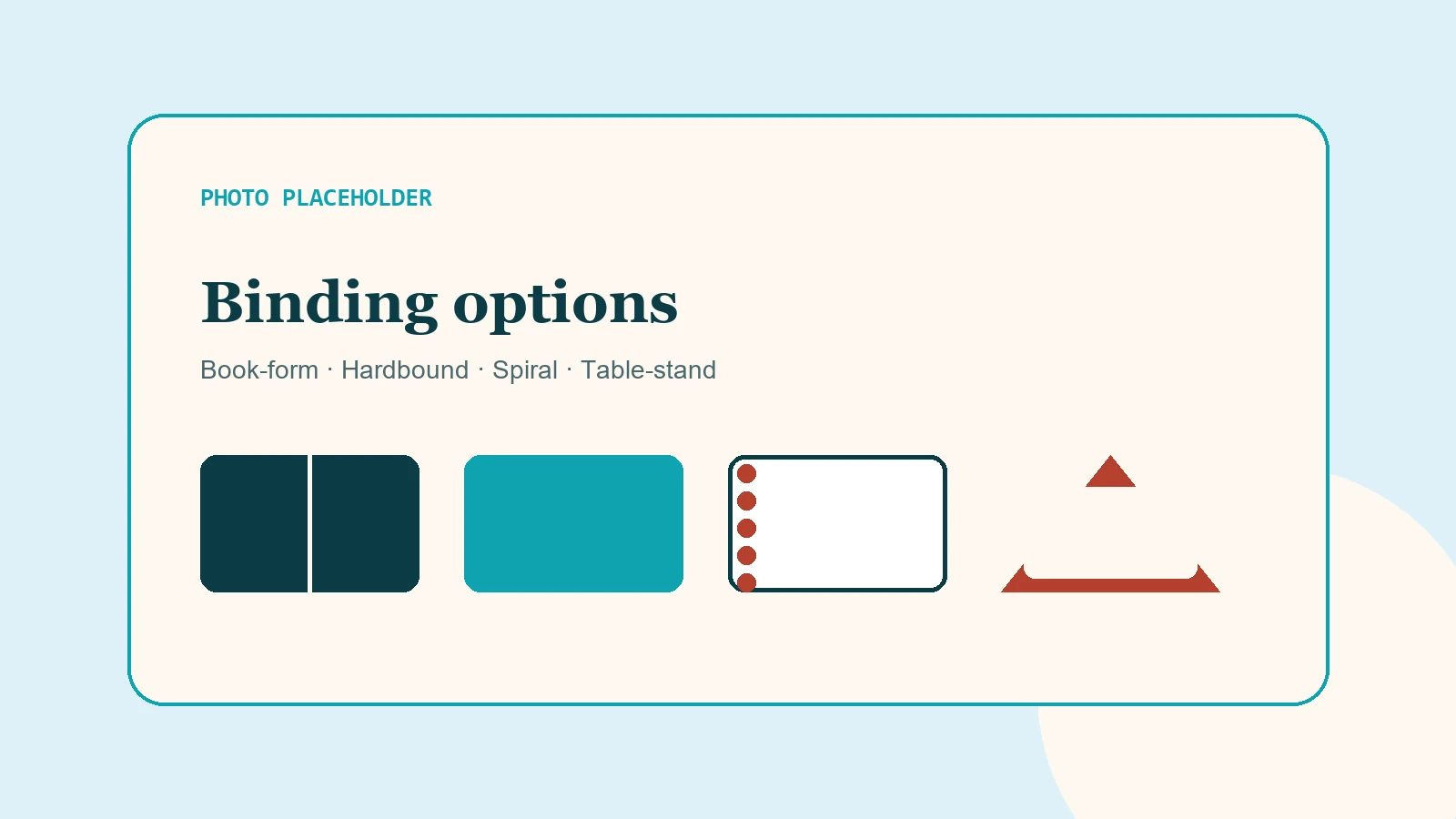
"We print everything" is not an answer. A serious pharma printing company can talk specifics: paper GSM for a visual aid versus a chit pad, gloss versus matt lamination, and binding styles — book-form, hardbound, spiral or table-stand — with a recommendation for your use case. If they can't explain why a launch visual aid wants a premium matt finish while a chemist book wants durable carbon-copy pages, they're guessing with your brand.
6. Can you deliver pan-India, and is dispatch tracked?
If most of your MRs are outside the printer's city, delivery is not a detail — it's the whole thing. Ask whether they design and proof remotely (over WhatsApp and email) and whether dispatch comes with tracking. A partner who ships across states routinely will say so plainly and share the courier route. One who only serves their own city will go quiet on this question.
7. Do you provide both print and digital (E-Visual Aid) versions?
The same design you print can double as a swipeable digital visual aid your MRs open on any phone after a doctor call. A partner who offers print plus digital from one approved design saves you a second design cost and keeps your brand consistent across both formats. If your printing company has never heard of an E-Visual Aid, they're behind where pharma marketing already is.
8. What is included in the price — is design billed separately?
Some vendors quote a low print rate, then add a separate "design" or "agency" fee that quietly doubles the bill. Ask for an itemised quote up front: design, printing, binding, dispatch. A transparent pharma printing company folds design into the order rather than surprising you later. Visual aid pricing depends on page count, size, GSM, lamination, binding style and quantity — a partner who explains those factors is quoting honestly; one who won't break it down is hiding something.
The 2 questions almost nobody asks — but you should
Everyone asks about price and delivery. Almost no buyer asks the next two — and they're the ones that decide whether this becomes a one-time job or a partner you keep for years.
9. Who owns the design files and reference research after the order?
Most buyers never ask this, and regret it later. If your printer keeps your editable design files hostage, your next reprint, size variant or vendor switch becomes painful and expensive. A fair partner treats the design you paid for as yours — files available on request, no ransom. Before you pay, confirm you can get your artwork back. This one question can save you from being locked to a vendor for years.
10. Will my reprint match the first batch exactly?
Colours drift between presses, paper lots vary, and a binding style done differently the second time makes your brand look inconsistent on a doctor's desk. Ask how they hold colour and finish accuracy across reprints: do they store your specs and approved files, print on the same setup, and match to the original? A partner who has a clear answer is thinking about your brand over years. One who shrugs is thinking only about this order.
What decides the price of pharma printing?
For a visual aid, six things move the number: page count, finished size (A4, A5 or custom), paper GSM, lamination (gloss or matt), binding style, and order quantity. Design is best included in the order, not billed as a separate agency fee. Larger runs cost less per piece because setup is shared across more units. The fastest route to a real figure is sharing your specs for an itemised quote.
The bottom line
The cheapest quote is rarely the cheapest order. A pharma printing company that specialises, owns quality end to end, proofs fast, prices transparently, and answers Questions 9 and 10 without flinching will cost you less across a year than a low bidder who reprints wrong and holds your files. Ask the ten. The partner worth keeping will welcome every one of them.
FAQ
What should I look for in a pharma printing company?
Look for genuine pharma specialisation, a documented design, print and binding workflow, fast WhatsApp proofing, transparent itemised pricing, pan-India tracked dispatch, and clear ownership of your design files.
What is the minimum order for pharma visual aid printing?
With a flexible partner there is no high minimum — small PCD batches get the same design and quality process as large runs, with quantity only affecting the per-unit rate.
Does a pharma printing company include design in the price?
A transparent one folds design into the order. Always ask for an itemised quote so design isn't added later as a separate agency fee.
How long does a pharma printing order take?
Typically 12–15 working days from brief to dispatch, with a WhatsApp design proof shared within the first few days.
Can I get a digital version of my printed visual aid?
Yes — the same approved design can be delivered as an E-Visual Aid for MRs to present on any phone and share on WhatsApp after a doctor call.
Related reading
- Bulk Visual Aid Orders: MOQ, Pricing Slabs and Timelines
- 7 Visual Aid Design Mistakes That Kill MR Detailing
- Pharma Visual Aid Manufacturer in India
- Pharma Visual Aid Designing Services
- Visual Aid Printing Price in India
- Pharma printing in Lucknow
Delhi NCR teams can also use our Delhi NCR buyer's guide when comparing suppliers.