Pharma Visual Aid Designing Services
Pharma visual aid designing is the process of turning a brand's composition and clinical data into a page-by-page detailing story for doctors. RX Design Hub's pharma-specialist design team creates the concept, layout and visual flow, then coordinates printing through quality-focused partner presses and completes binding at its Lucknow unit.
Ordering 10,000 pieces or more? See bulk capacity, volume slabs and turnaround.
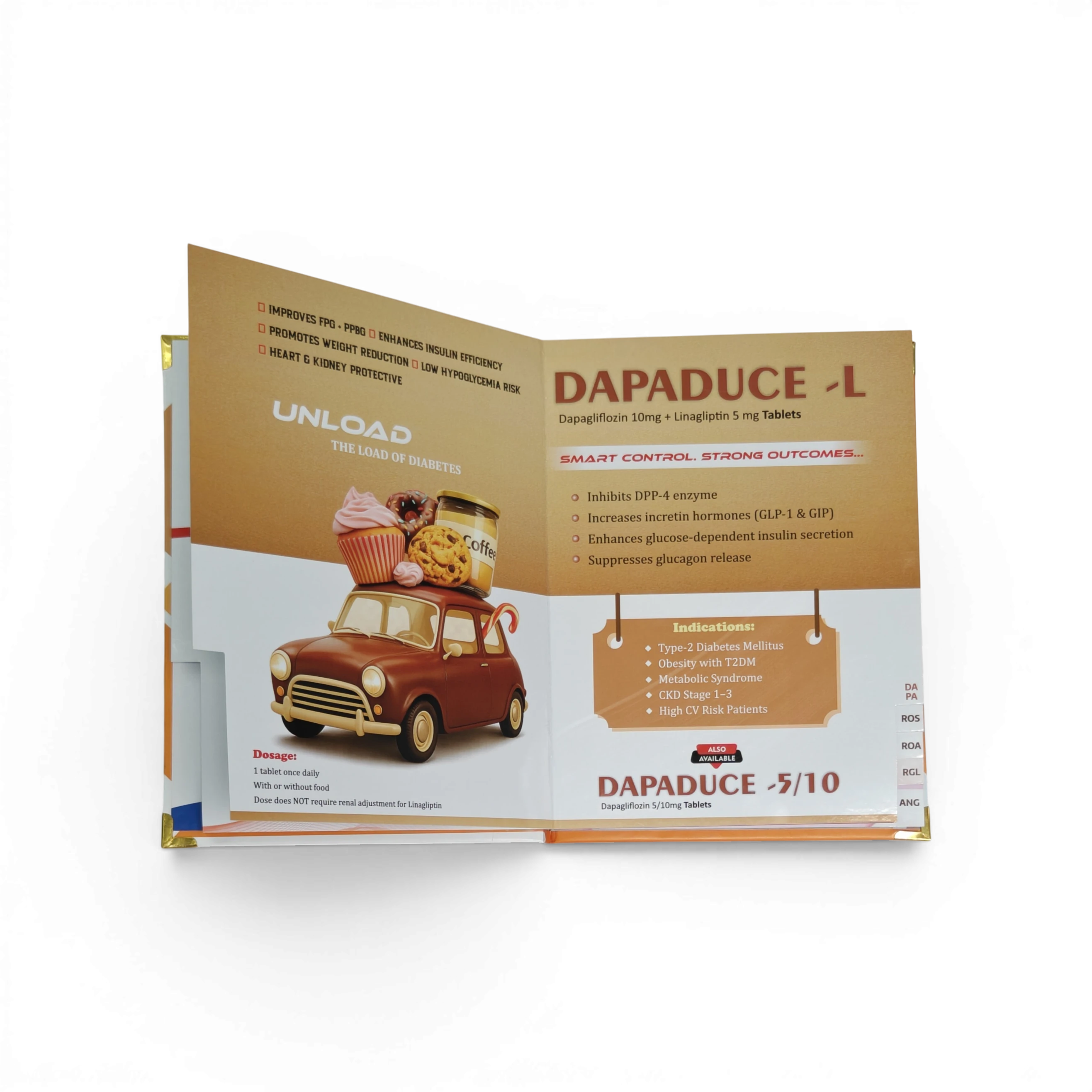
Designed Around Your Molecule, Not a Template
Good visual aid design starts with the molecule, the doctor, and the MR's spoken pitch. It should not look like a generic pharma brochure with a brand name dropped into a fixed template.
At RX Design Hub, our designers work only on pharma promotional material, so the first question is not which template do you like? The first question is what does this brand need to prove in the doctor's chamber? A gastro brand may need a clean before-and-after symptom story. A cardiac brand may need a more clinical, data-led rhythm with charts, risk markers and compliance cues. A derma or cosmetic brand may need premium skin visuals, softer space and a benefit-led progression. This difference matters because a visual aid is not decoration; it is a sales conversation printed into pages.
Every design starts from your brand name, composition and therapy segment. From there, we decide the page flow, headline hierarchy, colour story, clinical emphasis and final closing reminder. We also consider how the MR will hold the book, where the doctors eye will fall first, and which page should carry the strongest reason to remember the brand. Generic design shops often make one good-looking spread and repeat the same energy across every page. Our aim is different: the whole visual aid should move like a guided call, from hook to molecule story to indication to dosage to closing recall.
The result is a design that feels specific to your product. It respects your molecule, gives the MR a practical talking sequence, and still stays clean enough for a busy doctor to understand quickly. When the design is approved, the same file moves directly to our print and binding workflow, so spacing, margins, trim, lamination and finishing are planned from the beginning rather than corrected at the last minute.
Our Design Process
A simple brief is enough to begin. The detailed design thinking happens at our end, then you approve before print.
Brief
Brand name, composition and logo are enough to start. If you already have indications, dosage, competitor references or a preferred colour direction, we use them. If not, we structure the first concept from the therapy segment and the products main clinical promise.
Concept & Theme
The concept sets the tone before the layout begins. A pediatric range may need softer colours and friendly illustrations; an ortho or pain product may need movement, relief and anatomy cues; a cardiac range may need trust, clarity and data confidence.
Page Flow
The page sequence usually moves from cover to molecule story, indications, dosage, clinical advantage and closing reminder. The flow is adjusted to your brand, but the purpose stays the same: give the MR a logical story that can be presented without confusion.
Approval Rounds
We share the design digitally before printing. This is where you can check brand spelling, composition, logo placement, claim tone and page order. Revisions are handled before anything goes to press, so the final printed visual aid matches the approved artwork.
Print-Ready Files
Our own graphic team prepares the final print files with margins, bleed, page pairing and finishing in mind. There is no third-party handoff where a printer has to guess how the design should be produced. The same team that designs the aid prepares it for manufacturing.
Final Production Link
Once approved, the design can move straight into printing, lamination, binding and dispatch. This keeps the process faster and reduces the chance of quality loss between design and production. For production detail, see our visual aid manufacturer in India page.
Share your brand name and composition — we handle design, print, binding and dispatch.
Send the basic brief on WhatsApp. We will suggest the page flow, design direction and print format before production begins.
Therapy Segments We Design For
The same design language cannot work for every therapy. Each segment needs a different visual weight, colour temperature and proof style.
For gastro brands, we keep the page flow direct, symptom-led and easy to scan because the doctor must quickly connect the product with relief, digestion, acidity or gut comfort. For derma and cosmetic ranges, the design tone is cleaner and more premium, with space for skin visuals, before-after logic and benefit-led headings. Cardiac products need a more clinical feel: strong typography, measured colour, data points and compliance messages that create trust without looking crowded.
Gynae products often need warm but professional layouts, because the message may combine care, safety and outcome. Pediatric visual aids work better with softer palettes, illustrations and gentle spacing, while still keeping dosage and indication information clear. Ortho and pain brands usually need movement, joint, muscle or nerve visuals that help the MR explain pain relief in a simple sequence. Ophthalmic products need clean, precise visuals because eye-care messaging depends on clarity and hygiene. General physician ranges often require the most balanced approach, because one visual aid may cover broad use across daily practice. We do not invent claims or fake clinical proof; we design the available information in a way that is easier to present.
Design + Print Under One Accountable Team
A design-only agency can make a file. A pharma production workflow has to make sure that file becomes a strong physical visual aid.
When design and printing are separated, small issues become big delays: margins are not planned for binding, images are not prepared for the chosen paper, page sequence needs adjustment, or the printer cannot match the intended finish. With one accountable team, the design is built with production in mind from day one. If the aid is hardbound, spiral, staple-bound, without-staple or NTR non-tearable, the layout is prepared for that format. If you choose matt lamination, gloss lamination, back-to-back pasting or gold foiling, those finishing choices are considered while the design is still being approved.
This is why our design service naturally connects to printing and binding. You can ask only for design, but most pharma companies prefer the complete path because it reduces coordination and keeps accountability clear. The same team understands what was approved, what has to be printed and how the final piece should feel in an MR's hand. For the physical production side, visit our visual aid manufacturer in India page. For product formats, see pharma visual aid printing options.
Keeping the Brand Consistent After the Visual Aid
A connected design workflow also keeps the brand language consistent after the main visual aid is approved. The same cover style, colour system, molecule icon, benefit line and typography can move into reminder cards, prescription pads, LBL-style pieces or chemist material. For a field team, this consistency is useful because the doctor sees the same brand memory across multiple touchpoints. For the company, it reduces repeat briefing and makes reorders easier because the design system is already understood.
This is especially helpful for companies building an entire launch kit. The visual aid may carry the full doctor-detailing story, while a reminder card carries the recall line and a prescription pad keeps the brand present on the doctors desk. When all of these items are designed separately, the campaign can feel scattered. When they are planned together, the MR gets a cleaner set of tools and the brand looks more controlled in the market.
When a Specialist Design Team Helps Most
New product launch
Launch visual aids need a strong opening page, clear molecule positioning and a memorable closing page. The design must help the MR introduce the brand confidently from the first visit.
Range refresh
If your old visual aid looks dated, redesign can improve hierarchy, page flow and finishing while keeping the existing brand identity intact. This is useful when a product is already known but needs sharper field material.
MR call improvement
If reps struggle to explain a brand in two minutes, the design may need a better story. A clear spread sequence gives them a cleaner path from opening hook to prescription trigger.
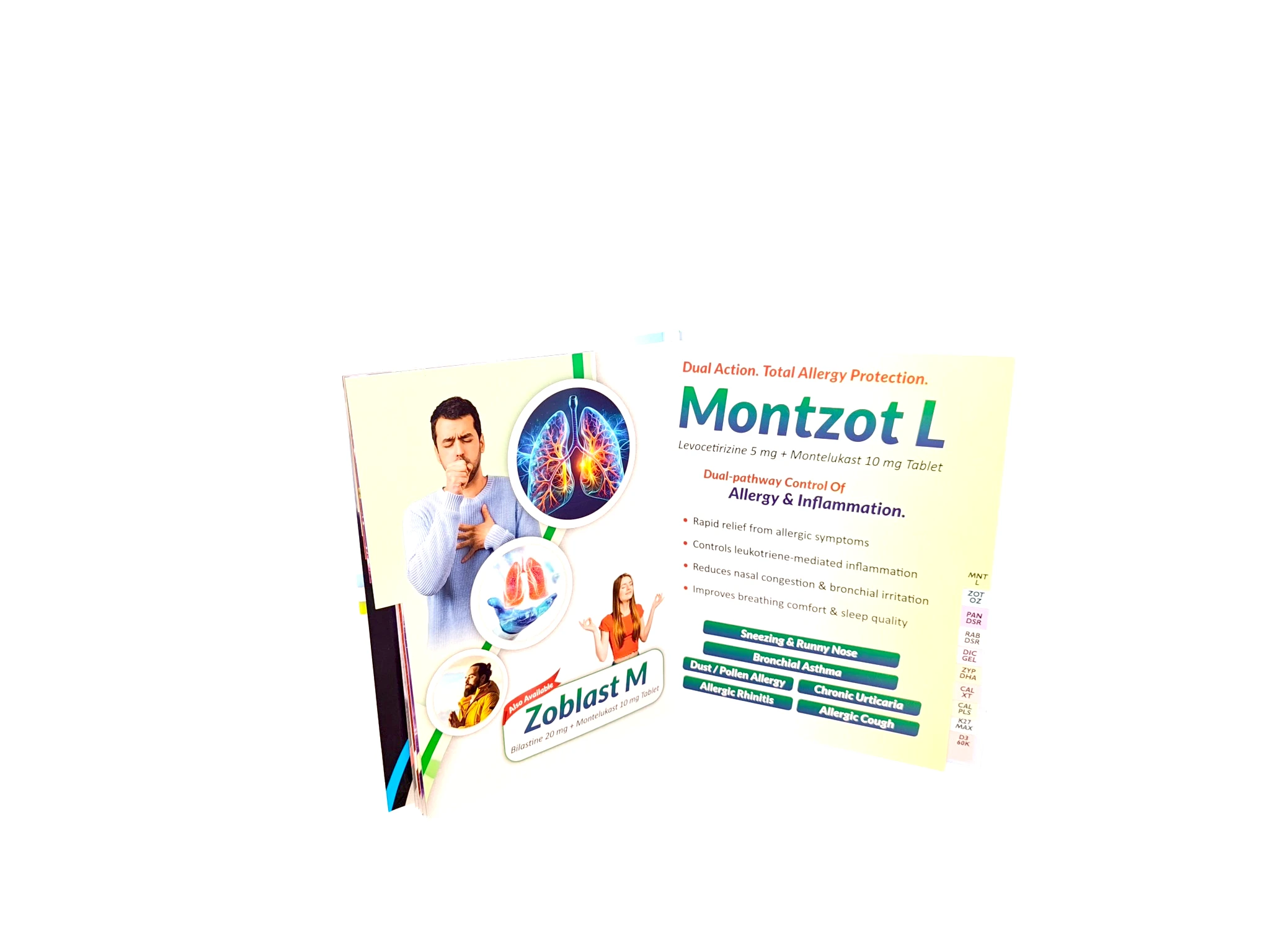
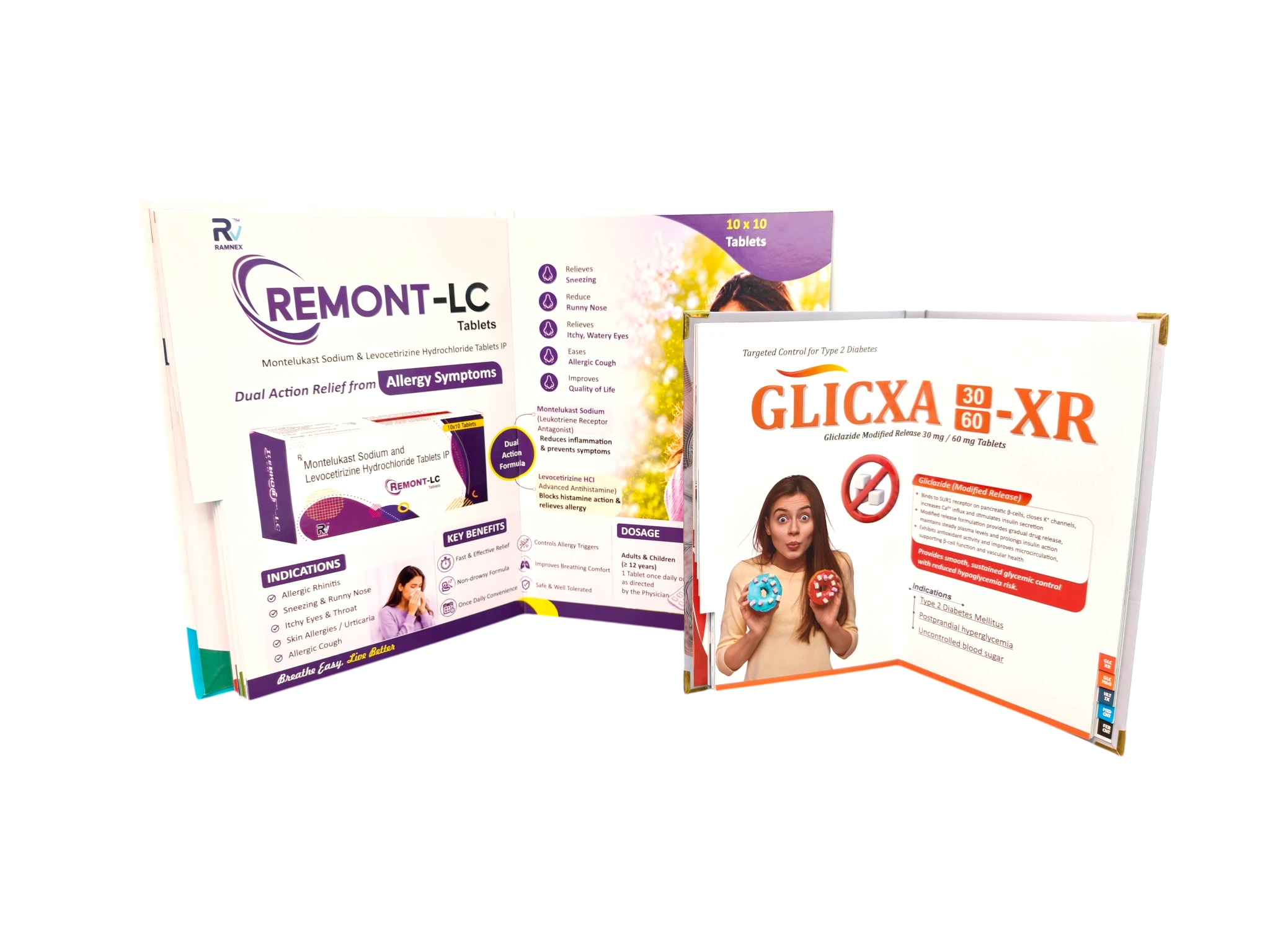
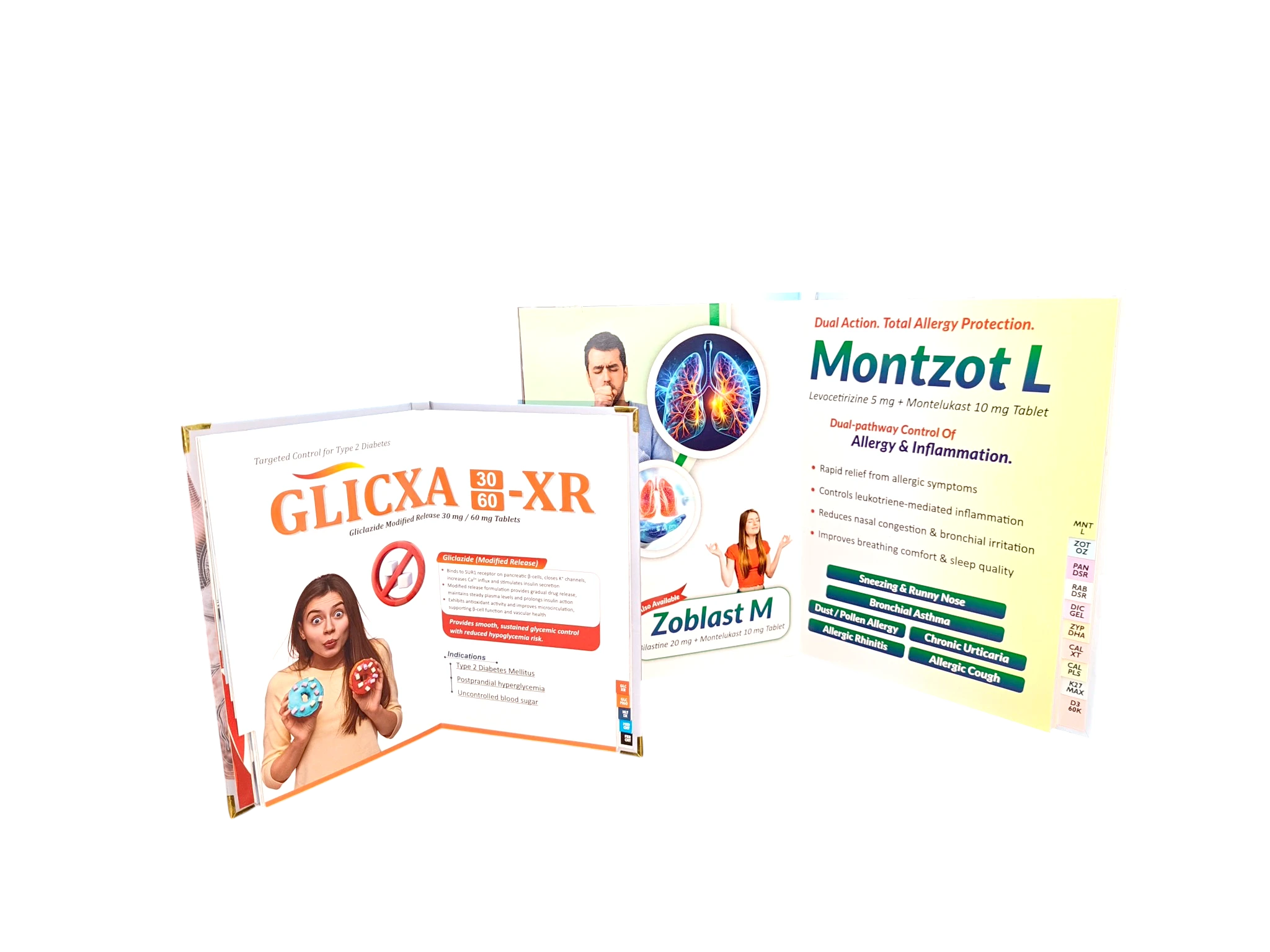
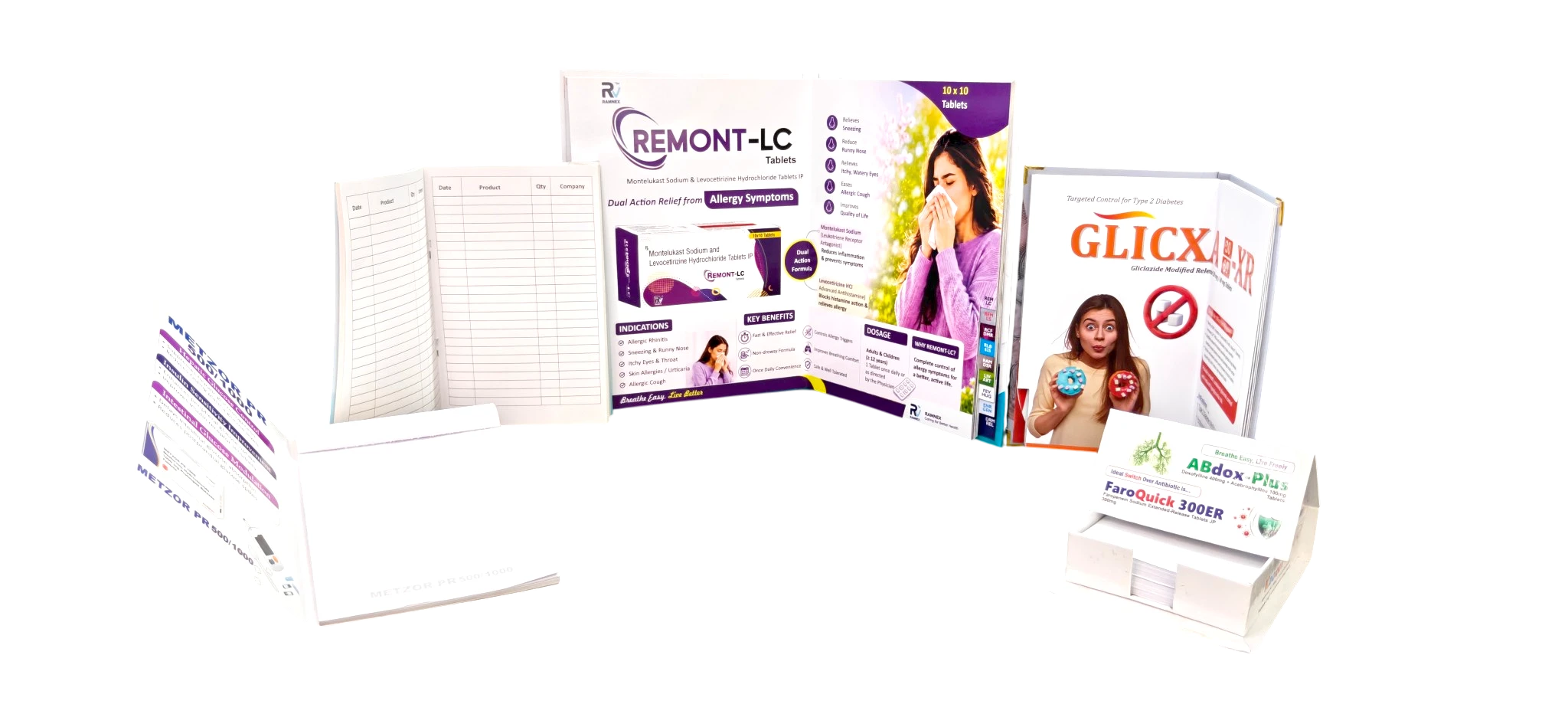
Design work from our studio.
Layouts planned around a two-minute detailing call, then printed and bound by the same team.
Pharma visual aid designing questions.
Only your brand name, composition and logo. Our team handles the concept, content structure, layout and design, and shares everything for your approval before printing.
Yes, we design e-visual aids as PPT or interactive PDF for tablet-based detailing, in the same page flow as the printed version.
Yes. Share your current visual aid and we will rework the design, page flow and finishing while keeping your brand identity intact.
We share the complete design digitally for your approval. Printing starts only after you confirm, so there are no surprises.
Continue with the right next page.
Share your brand name and composition — we handle design, print, binding and dispatch.
Send the details now and our team will reply with the next step.
Need pharma printing support beyond one city?
Explore our pharma printing services across India for Lucknow, Delhi NCR, Baddi, Ahmedabad, Hyderabad, Patna, Kolkata and other pharma markets.
It begins with the doctor conversation and desired recall, then gives every page a clear role. Decoration supports that hierarchy instead of becoming the main purpose.
Yes. The specialty, prescribing context, patient type and likely objections shape the message sequence, imagery and evidence treatment.
Yes. We can audit the current flow, retain valid content and rebuild the hierarchy, page sequence, charts and recall system where needed.
Revision scope is agreed with the quote because a single-brand book and a multi-brand catalogue require different review effort. We ask clients to consolidate factual corrections for faster approval.
Deliverables and editable-source requirements are confirmed before the project begins. The final approved artwork is prepared for the agreed print specification.