Visual Aid for MR (Medical Representative)
A visual aid for MR also called a detail aid is the booklet a medical representative opens in front of a doctor to present a brand in under two minutes. RX Design Hub designs MR visual aids around the actual call flow: hook, molecule story, clinical advantage, and a closing reminder the doctor retains.
Ordering 10,000 pieces or more? See bulk capacity, volume slabs and turnaround.
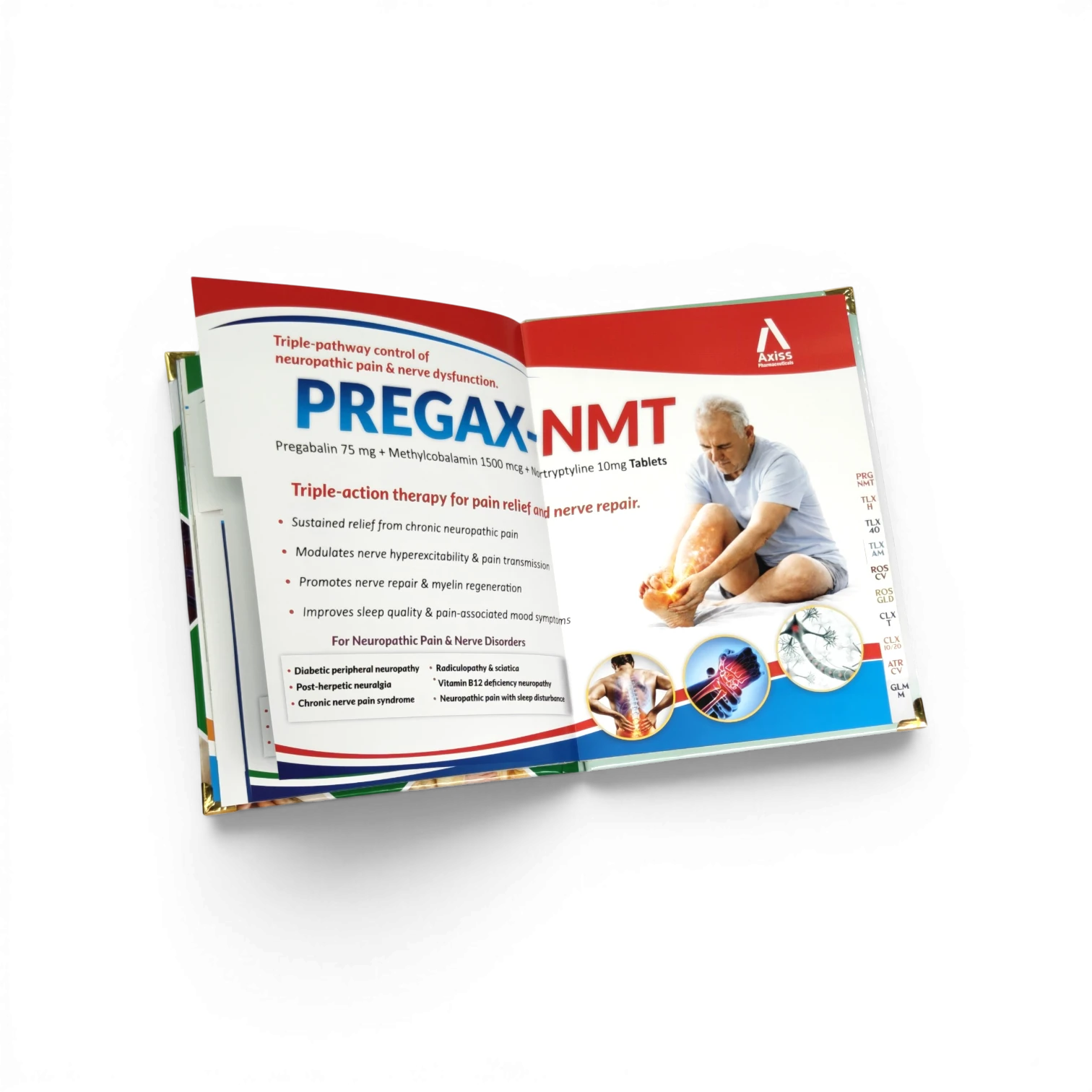
Why the MR's Call Flow Decides the Design
An MR visual aid is judged in the doctors chamber, not on a designers screen.
The average doctor interaction is short. In many real field situations, the MR may get only two to three minutes to open the conversation, introduce the brand, explain the reason to prescribe, handle a quick question and close with recall. That is why a visual aid for MR cannot be designed like a long brochure. It has to follow the call flow. The cover should help the MR open the conversation quickly. The first spread should give a clear reason for the doctor to keep looking. The molecule or composition page should be easy to explain without reading heavy paragraphs. Indication spreads should make the use-case visible at a glance. Dosage and advantage pages should not slow the call down.
A good MR detailing visual aid also gives the representative confidence. When the sequence is natural, the MR does not have to jump around pages or memorize an awkward script. The page flow becomes the pitch: hook, molecule story, indication, clinical advantage, dosage and closing reminder. The doctor can understand the core message quickly, and the MR can bring attention back to the brand if the call becomes rushed. This is also why design hierarchy matters. Large headings, simple visuals, spacing, page breaks and a strong closing line help the field team use the piece in real conditions.
At RX Design Hub, we design detail aids with the MRs hand movement in mind. A spiral-bound aid opens differently from a hardbound book. A landscape visual aid creates a different viewing angle than portrait. A laminated sheet reflects light differently in a clinic than a plain digital mockup. The design has to account for these practical details because the final product is used repeatedly, not just admired once.
Anatomy of an Effective MR Visual Aid
Cover
The cover carries the brand name and one-line hook. Its job is to open the conversation and make the doctor understand the product direction instantly. A crowded cover weakens the opening; a focused cover gives the MR a clean starting line.
Molecule/Composition Page
This page explains what the brand contains and why that composition matters. It may include molecule names, strengths, formulation benefits and a simple support visual. The goal is clarity, not a chemistry dump.
Indication Spreads
One indication per spread usually works better than mixing many uses together. A visual-first spread lets the MR talk while the doctor sees the key patient or condition context immediately.
Clinical Advantage / Comparison Page
This page should show the practical advantage: better compliance, better coverage, combined action, improved convenience or a positioning point supported by available information. It should be easy to absorb in one glance.
Dosage Page
The dosage page must be precise and calm. It should not compete with heavy visuals. Doctors often look for dose, pack, form and administration cues quickly, so typography and spacing matter here.
Closing Reminder Page
The final page should make the brand memorable. It can include the key benefit line, prescription trigger, reminder card connection or call-to-action for the doctor. This closing recall is what the MR leaves in the doctors mind.
Share your brand name and composition — we handle design, print, binding and dispatch.
We will create a practical MR call-flow visual aid, then print and bind it for field use.
Built for Field Life
The best design fails if the book cannot survive daily MR use.
An MR may carry the same visual aid in a bag through daily travel, monsoon weather, clinic waiting areas and repeated opening across 12 or more calls a day. This is why lamination, paper strength and binding choice matter. Matt lamination gives a premium, soft feel and reduces glare. Gloss lamination gives brighter colour and a more polished shine. Hardbound book-form aids feel solid in the hand, while spiral aids can open flat for easier table presentation. For heavy travel, humid regions or long campaign life, NTR non-tearable visual aids use synthetic sheets that are waterproof, washable and tear-resistant. That durability can be important when one piece needs to remain presentable for months of field work.
The physical format should match the MRs use-case. A quick campaign may need a lighter staple-bound aid. A premium launch may deserve a hardbound form with high-GSM paper and finishing. A brand that needs repeated rural or monsoon field use may benefit from NTR. Instead of choosing only by appearance, we help match the finish with the job the MR has to do.
Detail Aid, LBL and Reminder Card Where Each Fits
A detail aid or MR visual aid is the main in-call presentation tool. It is opened during the conversation and used to explain the brands composition, indication, advantage and dosage. It needs enough pages to support a two-to-three minute discussion, but not so many that the MR loses the doctors attention.
An LBL, or leave-behind literature, is different. It is usually a single-sheet or compact print piece left with the doctor after the call. The LBL does not carry the full detailing story; it reinforces the key message, dosage or product reminder after the MR has left. If you need a leave-behind item, our reminder card printing options can support similar recall material.
A reminder card is even quicker. It is a small revisit tool used for brand recall, campaign reminder or repeat exposure. It works well when the doctor already knows the product and the MR wants to keep the brand visible. In a complete campaign, the visual aid handles explanation, the LBL supports memory, and the reminder card keeps the brand active in follow-up visits.
How We Plan MR Detailing Material
We begin with the product information and the expected call situation. If the MR has to launch a new antibiotic, the page flow may need strong trust, spectrum, dosage and compliance cues. If the brand is derma, the opening may need visual benefit and patient confidence. If the brand is pain or ortho, the visual aid may need movement, inflammation or relief sequence. The design is not built only for the product manager; it is built for the person who has to use it in front of a doctor.
We also think about page count. Most MR visual aids work well between 8 and 16 pages because that range allows enough space for brand story, indications and dosage without becoming too long for a short call. If the product is simple, fewer pages may be stronger. If the therapy is complex, more spreads can help, but only if each page has a clear role. This is where our visual aid designing service connects directly with field use.
Once the design is approved, production choices are finalized: paper, lamination, binding and dispatch. For product specifications and NTR options, see our pharma visual aid page. For complete manufacturing capability, see our visual aid manufacturer in India page. Field teams going digital can also explore our e-visual aid app for Android.
Easy for the Field Team to Rehearse
The strongest MR aids are also easy to rehearse. A sales manager should be able to open the book with the team and explain the call sequence page by page. If the story cannot be practiced simply, the design is probably trying to do too much. We keep the message hierarchy practical so the field team can use it repeatedly, even when the doctor gives less time than expected. This makes the visual aid more than a printed product; it becomes a repeatable field script with a professional look.
Built for the call, not the desk.
Formats chosen so a medical representative can open, present and close in about two minutes.
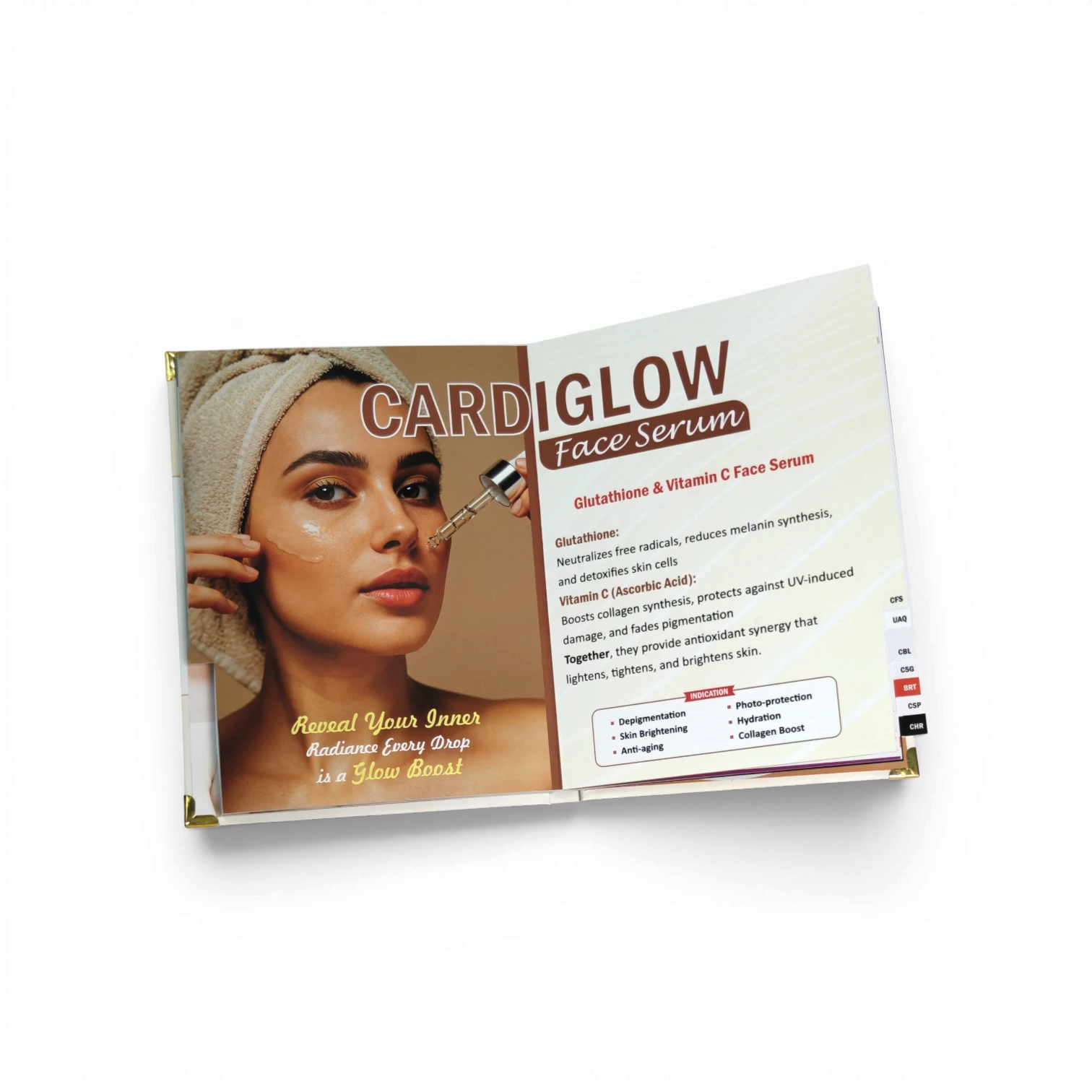
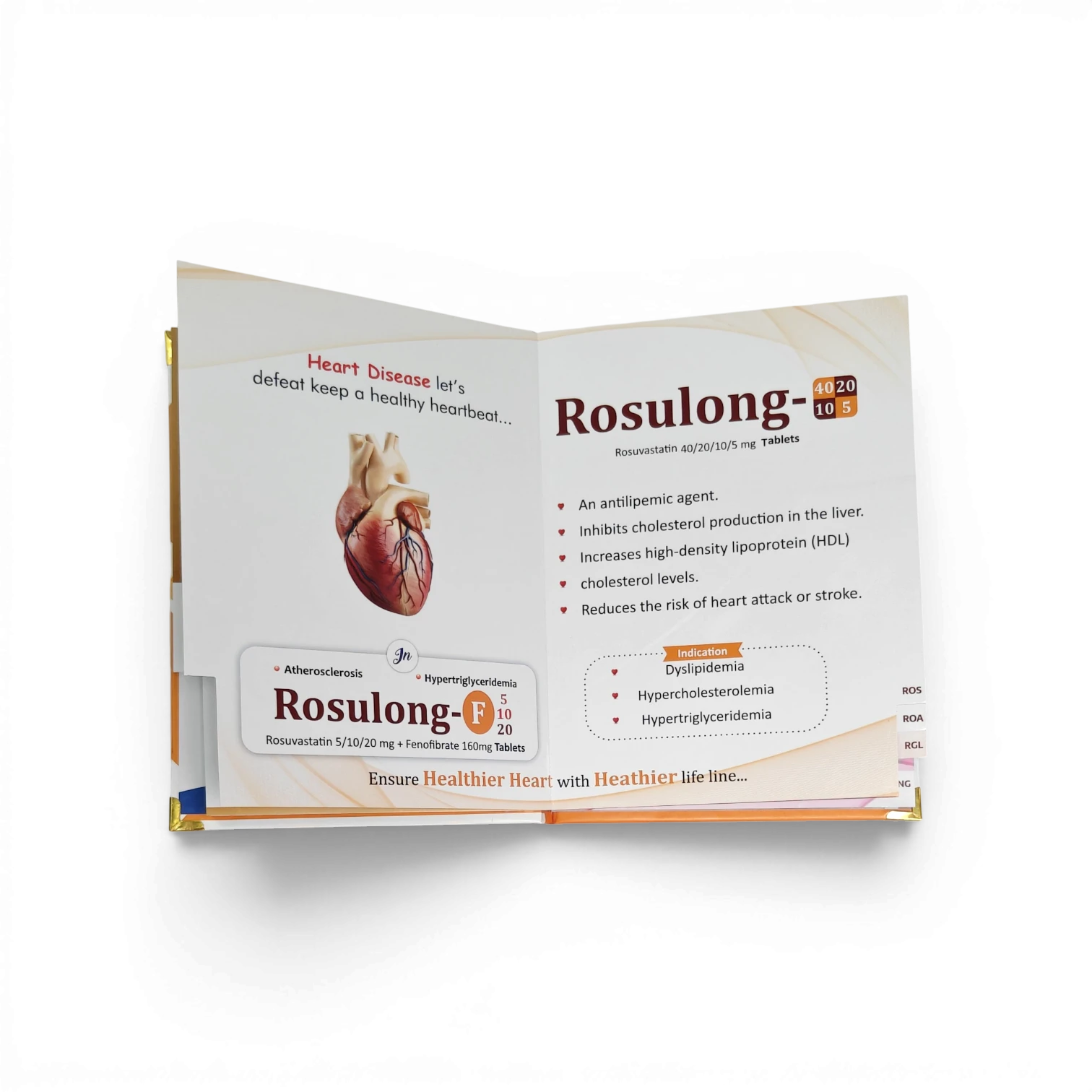
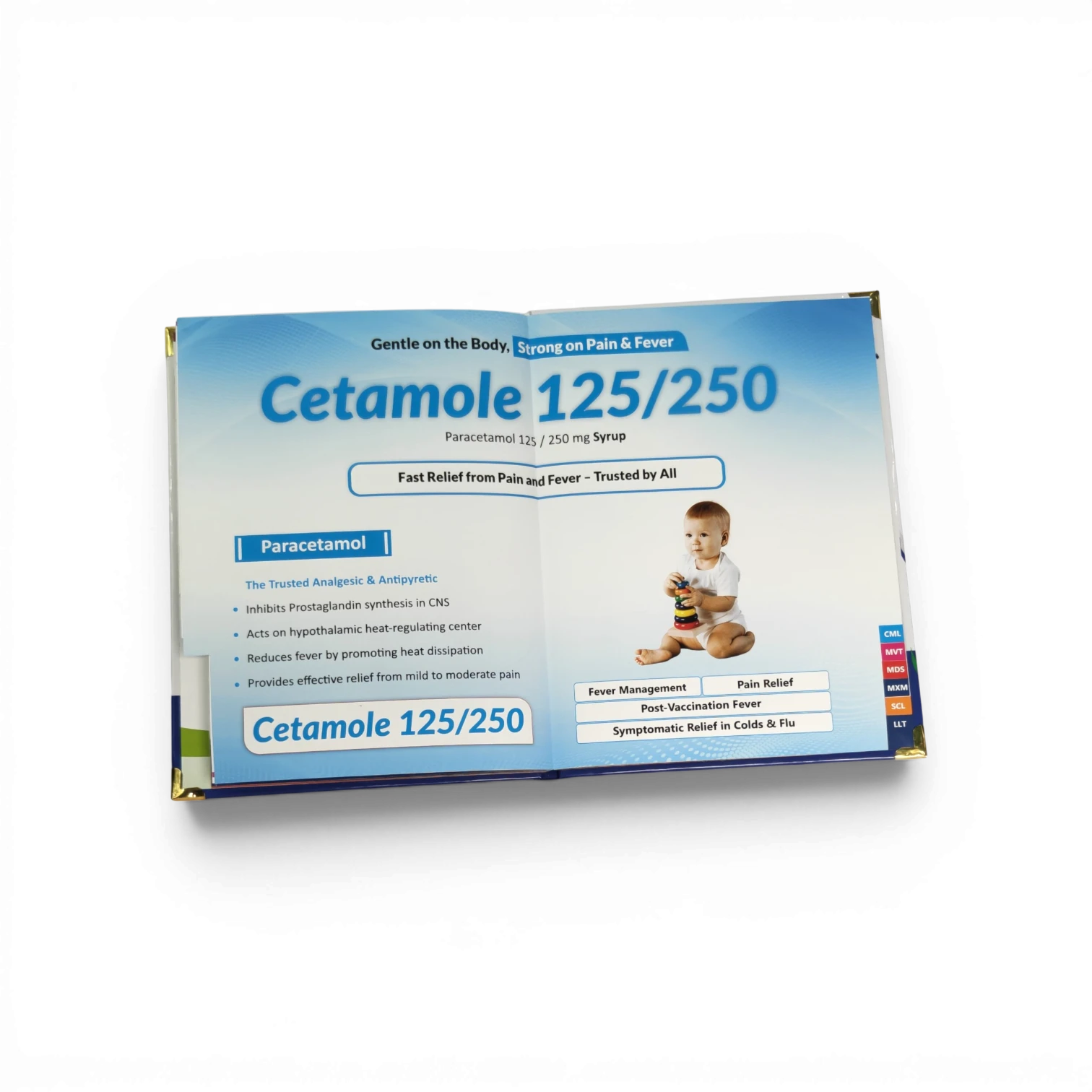
MR visual aid questions.
It is the booklet a medical representative uses during a doctor call to present a brand's composition, indications and advantages. It is designed to support a two-to-three minute detailing conversation.
Most MR visual aids run 8 to 16 pages enough to cover the brand story, indications, clinical advantage and dosage without stretching the call.
A visual aid is used during the call for detailing; an LBL (leave-behind literature) is a single sheet the MR leaves with the doctor after the call as a reminder.
Hardbound book-form and spiral binding survive daily field use best. For heavy travel or monsoon regions, NTR non-tearable synthetic sheets are the most durable option.
Explore the full visual aid path.
Share your brand name and composition — we handle design, print, binding and dispatch.
Send the MR campaign requirement and we will help you plan the detailing aid.
Need pharma printing support beyond one city?
Explore our pharma printing services across India for Lucknow, Delhi NCR, Baddi, Ahmedabad, Hyderabad, Patna, Kolkata and other pharma markets.