Guide
What Is a Visual Aid in Pharma Marketing?
A visual aid in pharma marketing is a printed or digital detailing booklet that a medical representative (MR) presents to a doctor during a call. It carries the brand's molecule story, indications, dosage and clinical proof in a fixed page flow, so a complete, consistent brand message lands in a two-to-three minute conversation.
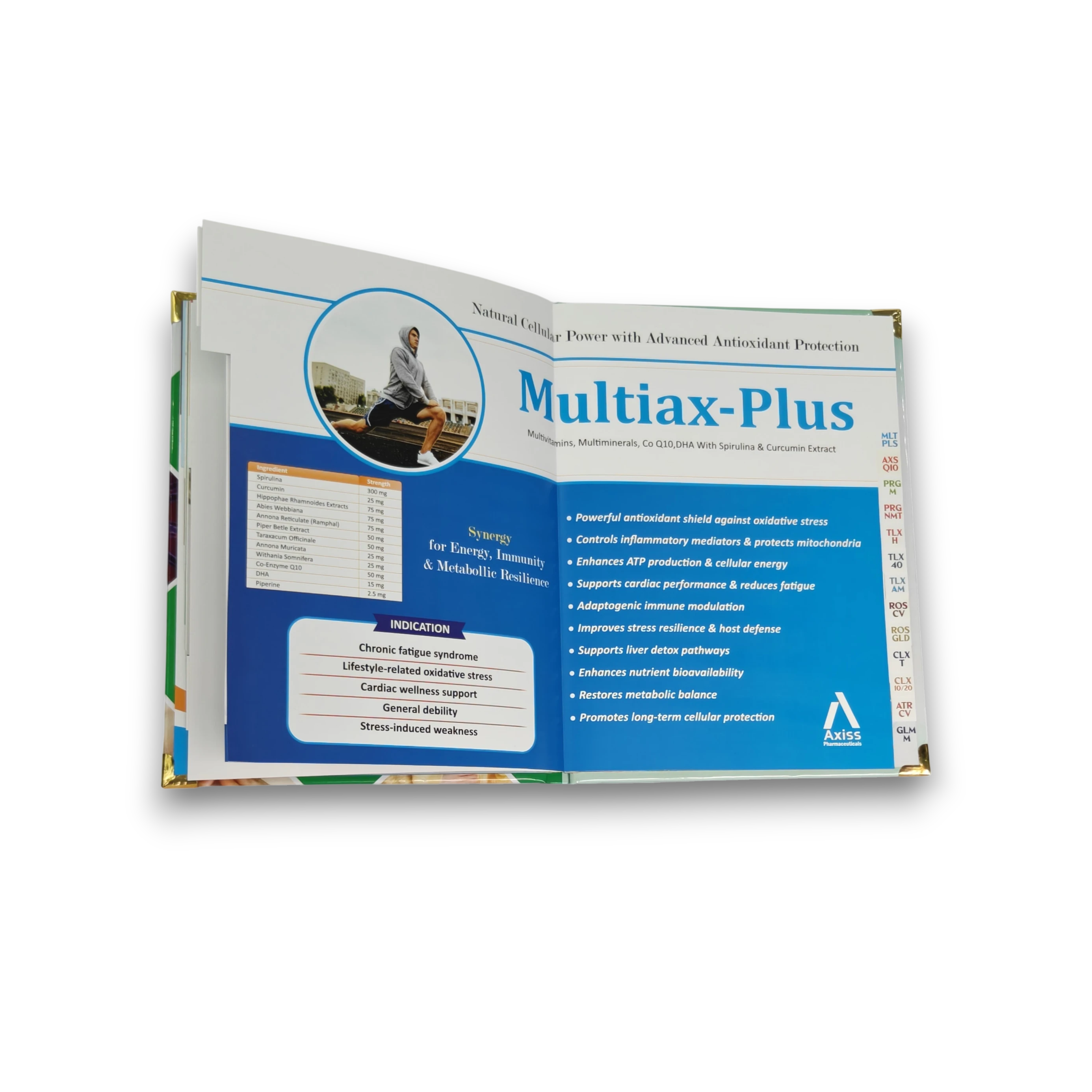
If you run a pharma brand, a PCD franchise or a field force, the visual aid is the single most-used marketing tool in your MR's bag. This guide covers how it works in a real doctor call, which formats exist, what pages to include, and the design mistakes that quietly waste your print budget.
How MRs use a visual aid in a 2-minute doctor call
The average doctor call in India is short, often under three minutes, with other MRs waiting outside the chamber. A visual aid exists to make those minutes count. It gives the call a script the MR cannot forget, because the script is printed in order.
A well-planned call flows with the pages:
- Cover - instant brand recognition. The doctor should know the brand before the MR finishes the greeting.
- Molecule story - why this molecule, in one confident spread.
- Indication pages - which patients, which conditions, framed around what the doctor sees in the OPD every day.
- Dosage page - strength, frequency and duration, readable at arm's length from the doctor's side of the desk.
- Clinical proof - trial data or references that answer the doctor's natural "why should I switch?" objection.
- Closing page - the brand name again, pack shot, and the one line you want remembered after the MR leaves.
Because every MR carries the same booklet, a hundred field calls in a week deliver the same message in the same order. That consistency is what builds prescription habit. We go deeper into field usage on our visual aid for MR page.
Visual aid terms: VA, CVA, detail aid, LBL and e-VA
Pharma marketing uses several short forms for the same family of detailing material. Here is what each one means in Indian field practice:
| Term | Full form | What it is |
|---|---|---|
| VA | Visual aid | The multi-page booklet an MR presents to a doctor and takes back after the call. |
| CVA | Core visual aid | The main, full-length visual aid for a brand or division that carries the complete detailing story. Smaller campaign or "focus" aids are built around it. |
| Detail aid | Detailing aid | Another name for a visual aid – any printed or digital tool used while detailing a doctor. |
| LBL | Leave-behind literature | A short leaflet or card the MR leaves with the doctor after the call, so the key message stays on the desk. |
| e-VA | E-visual aid | The digital version of a visual aid, shown on a tablet or phone – see our e-visual aid app. |
In practice, a brand usually has one CVA used in every call, an LBL or reminder card left behind, and sometimes an e-VA for tablet detailing. For a deeper walk-through of sizes, specs and cost, read the complete pharma visual aid guide for MRs; for print options, see pharma visual aid design and printing.
Types of visual aids
Format decides how the visual aid feels in the doctor's chamber and how long it survives in the field. These are the formats Indian pharma teams actually order:
- Hardbound visual aid - rigid cover boards, laminated pages, premium in-hand weight. The format of choice for flagship brands and launches.
- Spiral visual aid - side-spiral binding that lies flat on the desk and flips cleanly page by page. The everyday workhorse for large field forces.
- NTR visual aid - printed on non-tearable (NTR), water-resistant synthetic sheets that can be wiped clean. Chosen when a visual aid must survive heavy daily handling across a large field force.
- Landscape formats - A4 or A3 landscape layouts that keep dosage tables and clinical charts readable from the doctor's side of the desk.
- E-visual aids - tablet or phone-based digital detailing with video and animation, increasingly used for remote calls and as a supplement to print.
Choosing between them is usually a team-size and positioning decision. A launch brand meeting top prescribers deserves hardbound presence; a 200-MR field force detailing daily needs spiral durability at scale. Compare finishes in our visual aid design samples, and weigh the cost difference on the visual aid printing price page.
What pages should a visual aid have?
Page count is a strategy decision, not a printing decision. Too few pages and the clinical story feels thin; too many and the doctor stops the call before the close.
For most brands, 12 pages is the proven structure:
- Cover - brand name, logo, tagline
- Molecule introduction
- Mechanism / mode of action
- Indication one
- Indication two
- Patient profile - who to prescribe for
- Clinical evidence - key trial or reference
- Comparative advantage - vs. current therapy
- Dosage and administration
- Safety and tolerability
- Pack shot and availability
- Back cover - brand recall line and company identity
8 pages suits single-indication brands and reminder campaigns where the doctor already knows the molecule. 16 pages earns its cost for flagship brands with multiple indications, strong trial data or a combination story that genuinely needs the space.
Print specs that matter
A visual aid is handled in dozens of calls a day, in heat, bags and waiting rooms. Specs decide whether it still looks premium in month three.
- 300 GSM art paper - the standard for pages that get flipped daily. 250 GSM works for lighter budgets, but 300 GSM holds its stiffness.
- Lamination on every page - matt lamination reads better under clinic tube-lights and resists fingerprints; gloss makes pack shots vivid.
- Binding quality - spiral loops that do not deform, hardbound spines that do not crack. Binding is where cheap printing fails first, which is why we keep binding in-house.
- A print-ready PDF - correct bleed, margins and colour profile. When design and printing happen under one accountable team, this step cannot go wrong between two vendors.
For how each spec moves the cost, see the visual aid printing price breakdown.
Visual aid design mistakes to avoid
We redesign visual aids for pharma companies every month, and the same four mistakes appear again and again:
- Overcrowded pages. Ten messages per spread means zero messages remembered. Every page should make one point, in type large enough to read across a desk.
- No molecule story. A collection of facts is not a story. Pages must build an argument in order: problem, molecule, proof, dose, close.
- Broken call flow. If the MR has to jump backwards through pages to answer a predictable question, the flow was never planned around a real call.
- Designed for the marketer, not the doctor. The booklet faces the doctor, upside-down to the MR. Doctor-side readability is the test that matters.
How RX Design Hub makes visual aids
We are a pharma-only design and printing company in Lucknow, working with pharma teams across India. Every visual aid moves through one accountable pipeline: page flow planning with you, design and approval, printing, in-house binding, and dispatch to your city. Design, printing and binding under one accountable team means no vendor handoffs and no "file was wrong" surprises. Start with the pharma visual aid design and printing page, or browse real samples first.
Visual aid FAQs
What is a CVA in pharma marketing?
CVA stands for core visual aid: the main, full-length visual aid for a brand or division that carries the complete detailing story. Smaller campaign aids, leave-behind literature and reminder cards are built around it.
What is the full form of LBL for a medical representative?
LBL means leave-behind literature: a short leaflet, card or folder that the medical representative leaves with the doctor after the call so the key brand message stays on the desk.
Is a detail aid the same as a visual aid?
Yes. Detail aid (detailing aid) and visual aid mean the same thing in pharma: the printed or digital booklet an MR uses while detailing a brand to a doctor.
What is the difference between a visual aid and an LBL or leave-behind?
A visual aid is the multi-page booklet the MR presents and takes back after the call. An LBL or leave-behind literature is a single sheet or small card left with the doctor as a reminder. Strong campaigns use both: the visual aid tells the story, the LBL keeps the brand on the desk.
What is the ideal page count for a pharma visual aid?
Twelve pages is the sweet spot for most brands because it gives enough room for a complete molecule story without losing the doctor's attention. Use 8 pages for single-indication brands and 16 pages for flagship brands with multiple indications or strong clinical data.
Should we choose a printed or digital e-visual aid format?
Printed visual aids still dominate Indian field detailing because they need no device, no battery and no app training. E-visual aids work best as a supplement for video, animation or remote calls. Many clients run both from the same design.
How long does it take to design and print a visual aid?
A typical project moves from brief to dispatch in a couple of weeks: page-flow planning and design first, your approval, then printing through quality-focused partner presses and binding at our Lucknow unit. Share your deadline on WhatsApp and we will confirm a realistic timeline for your format and quantity.
How do I start if I have never ordered a visual aid before?
Send your brand name and composition on WhatsApp. We will suggest a page flow, format and page count, show you relevant samples, and share an itemised quote before printing starts.
Ready to plan your visual aid?
See the full quotation with GST on screen, then place the order with your company name and WhatsApp number. Our design team collects brand details and shares the proof on WhatsApp after confirmation.