Custom specification guide
Custom Visual Aid Printing for Pharma Companies
Custom visual aid printing for pharma companies means choosing the size, pages, paper, binding and finish around your brand, field use and budget—not simply changing a logo on a standard book. RX Design Hub helps buyers decide which specifications add value and which only add cost.
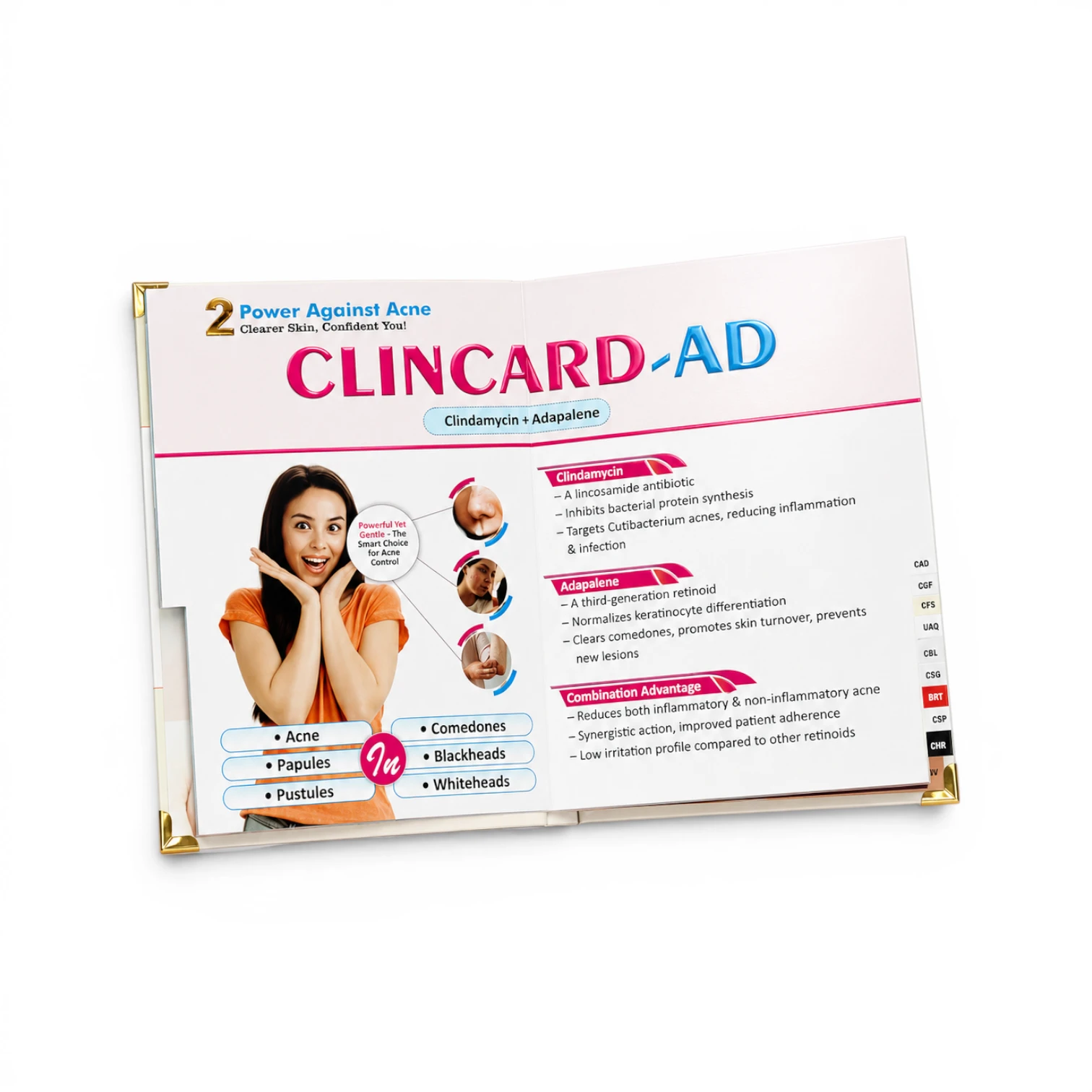
Start with how the MR will use the book. Daily high-frequency detailing needs durable construction; a short campaign may suit a lighter booklet. Select binding first, then page count, paper and finish as one connected specification.
What “custom” actually covers
Customization begins before artwork. Finished size changes how comfortably the MR holds the book and how large clinical visuals can appear. Page count affects weight, binding and cost. Paper construction decides rigidity, while lamination or coating changes touch, colour and resistance to daily handling. Foil, embossing or spot effects can add a premium cue when they serve the brand.
A useful specification names every part: closed size, total printed pages, paper GSM and construction, colour, lamination, binding, corner treatment, quantity and packing. Without that written list, two “custom visual aid” quotes may describe very different products.
Binding and format guide
| Format | Best for | Durability | Cost tier |
|---|---|---|---|
| Hardcover | Premium launches and long field cycles | High; rigid cover protects inner pages | Premium |
| Spiral | Frequent page flipping and books that must lie flat | Good; easy to use, coil needs sensible margins | Standard |
| Saddle-stitch booklet | Short campaigns and lean page counts | Moderate; light and easy to carry | Economy |
| Board-book construction | Compact, high-touch premium detailing | Very high; thick pasted sheets | Premium |
Cost tiers are relative. Final price depends on size, pages, paper, finish and quantity.
Finishes and paper options
| Option | Look and feel | When it makes sense |
|---|---|---|
| Gloss lamination | Bright colour and a smooth reflective surface | Budget-aware campaigns that still need wipeable protection |
| Matt lamination | Lower glare and a calmer premium feel | Text-heavy or clinical pages viewed under strong light |
| Soft-touch / velvet | Distinctive tactile surface | Premium brand launches where touch supports positioning |
| Matt UV | Matt base with selective visual emphasis | Cover details or brand elements that need controlled contrast |
| Foil or embossing | Metallic or raised accent | Used sparingly on a logo, name or cover device |
Most visual aids use sturdy art-card construction; 300 GSM sheets pasted back-to-back are a proven route for rigid pages. The correct choice still depends on page count and binding. A heavy multi-page book can become tiring, while paper that is too light may curl or feel disposable.
How to choose the right spec for your detailing
- Estimate field frequencyA book used every day for several months needs stronger construction than a short event handout.
- Protect the message hierarchyChoose a size that keeps graphs, claims and references readable without shrinking them.
- Match binding to page behaviourSpiral suits flat opening; hardbound gives presence; a booklet suits short, economical campaigns.
- Spend where the doctor noticesGood colour, readable pages and reliable binding matter before decorative effects.
Always leave extra inner margin beside a spiral or thick binding. Artwork that looks balanced as a loose PDF can feel cramped after holes, paste and page curvature take away usable space.
Customization for multi-product ranges
A growing portfolio does not always need a separate book for every brand. A modular visual system can give each product its own colour cue and page sequence while keeping one company identity. Range catalogues reduce duplicated setup, and planned inserts or versioned sections make later product updates easier.
Version control matters: mark approved files by date and product set, then retire older production artwork. That prevents two nearly identical catalogues from reaching the same field team.
Why RX Design Hub for custom work
Our design and print teams work in the same Lucknow workflow, so the specification is tested against artwork before production. MOQ starts from 10 books for visual aids, making a small proof-oriented run possible before a larger order. In-house finishing also makes it easier to compare samples and keep the approved construction consistent on repeat jobs.
Send your current PDF or a few page photos. We will flag the clearest design, print and detailing improvements before you place an order.
Ask for the free review on WhatsAppFrequently asked questions
What is the smallest quantity for a custom visual aid?
Visual aid MOQ starts from 10 books. The exact practical quantity depends on size, page count, finish and binding.
Which binding lasts longest for daily field use?
Hardcover and thick board-style construction offer strong protection, while a well-made spiral is easy to use and lies flat. The right choice depends on pages, weight and frequency.
Can you match our exact brand colours in print?
We work from the approved brand values and check a production proof, but screen colour and printed colour differ. Critical colours should be approved from a physical sample.
Do you offer foil or embossing?
Yes, where the format and quantity support it. We recommend using special effects selectively so they strengthen the cover rather than overwhelm it.
Can I order a sample pack before bulk?
Yes. Ask for available paper, finish and binding samples so you can compare construction before confirming the bulk specification.
Continue planning your visual aid
Build the right visual aid specification
Tell us how many brands, pages and field users you have. We will suggest a practical format and sample route.