Printed Visual Aid vs E-Visual Aid App
A printed visual aid is a physical brand presentation book, while an e-visual aid app presents brand pages on an Android phone or tablet. Both support doctor detailing, but they differ in handling, navigation and how changes are supplied.
Compare the presentation formats
The useful comparison is how print and an Android e-visual aid app fit your actual field routine.
| Consideration | Printed visual aid | E-Visual Aid App for Android |
|---|---|---|
| Portability | An MR carries the physical books needed for the call. More books add weight and bag space. | The prepared pages sit on an Android device. Carrying more digital pages does not add more printed books. |
| Brand navigation | The MR opens the relevant page using the book's sequence or a printed index. | Side brand indexing provides direct navigation to the brand being discussed. |
| Content changes | Changes may need replacement pages or reprinting, depending on the book format and extent of the revision. | RX Design Hub can arrange updates to add or remove brands, remove pages and replace content. |
| Offline access | No internet, device or battery is needed to open the book. | Prepared brand pages work offline during presentation. A charged Android device is still needed; confirm setup and update requirements separately. |
| Division organisation | Divisions can be arranged as separate books or within a planned printed sequence. | The app can be arranged for Cardiac, Diabetic, Gynae, Pedia and custom divisions. |
| Presentation experience | The doctor sees a physical page, its finish and its print size. | The doctor sees a screen-based presentation with smooth page animations. Screen size and brightness affect the viewing experience. |
| Cost over time | Consider design, quantity, paper, binding, dispatch and any reprints. | Consider design, complete app setup, any device costs and later content updates. Request a quote for your requirement. |
| Readiness for a call | Carry the current version and keep the book in usable condition. | Carry a charged device, check the app setup and confirm that the intended brand pages are available offline. |
This compares presentation formats, not competing app vendors. It does not claim that an app is always cheaper or that it replaces every printed visual aid.
When does print make sense?
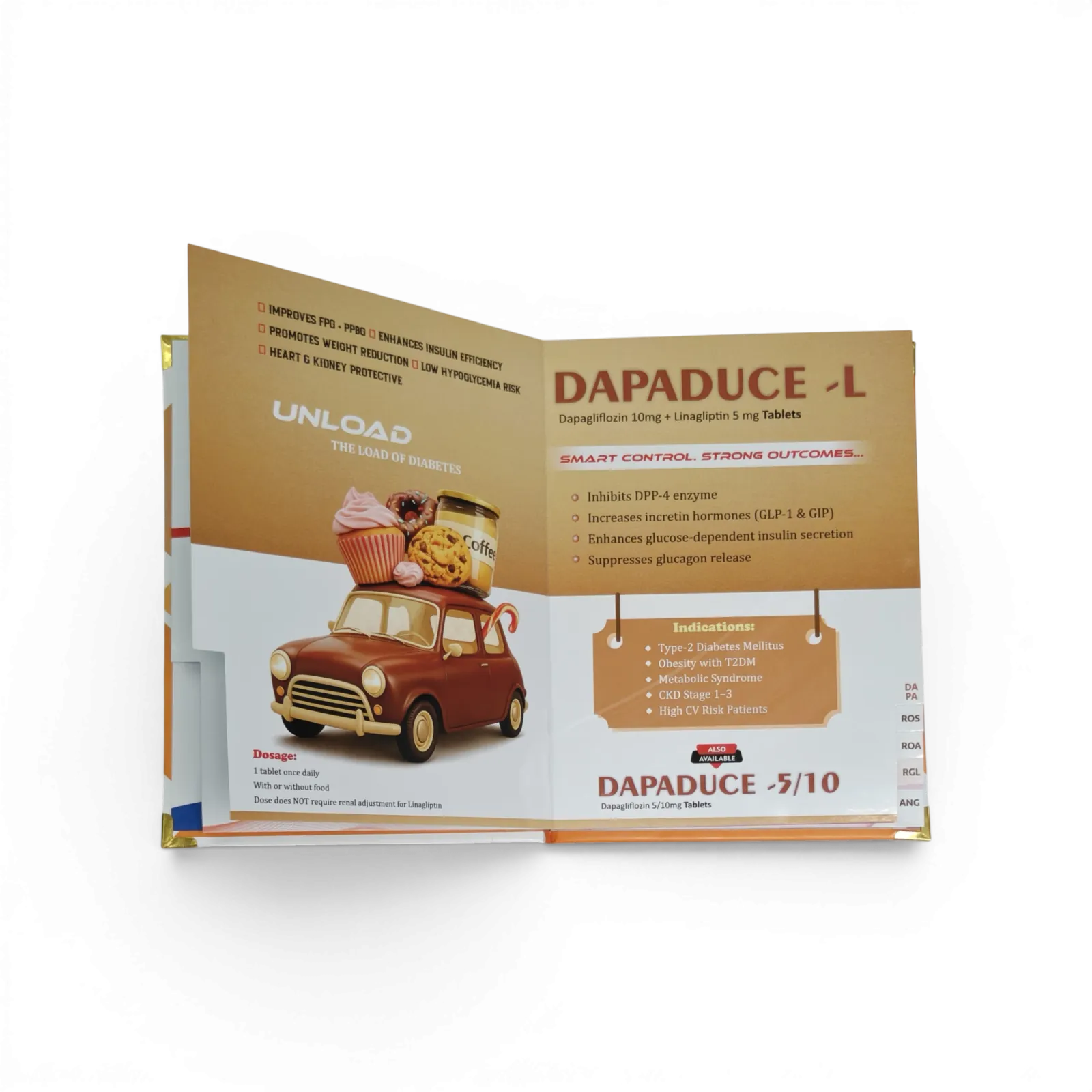
A printed visual aid makes sense when your field routine benefits from a physical book with no device dependency.
Print is worth considering when the team wants a consistent page size, a tangible finish or a presentation that can be opened without checking battery and screen settings. Review the page count, binding and handling requirements for the campaign.
See RX Design Hub's printed pharma visual aids and the visual aid printing price guide.
When does an app make sense?
An e-visual aid app makes sense when your team wants direct brand navigation and a digital portfolio on Android.
Consider the app when an MR needs to move between brands, carry several divisions or work from a larger set of prepared pages. Offline support addresses presentation inside a clinic without internet; it does not remove the need to plan device readiness.
Ask RX Design Hub for a sample, check the presentation on your intended device and review the app setup process before deciding.
Can print and the app work together?
Print and the e-visual aid app can be planned for the same brand campaign without treating them as identical outputs.
Decide which format your MRs need for each situation, then discuss how the content should be prepared for a printed page and an Android screen. A combined requirement does not automatically mean a combined price or an included app.
Share the print quantity, app page count and divisions with RX Design Hub. Compare the full quoted scope before choosing print, app or both.
Ask RX Design Hub for a sample
A free sample of the e-visual aid app is available on request.
Send your page count and divisions. RX Design Hub can then discuss the design requirement and complete Android app setup.